
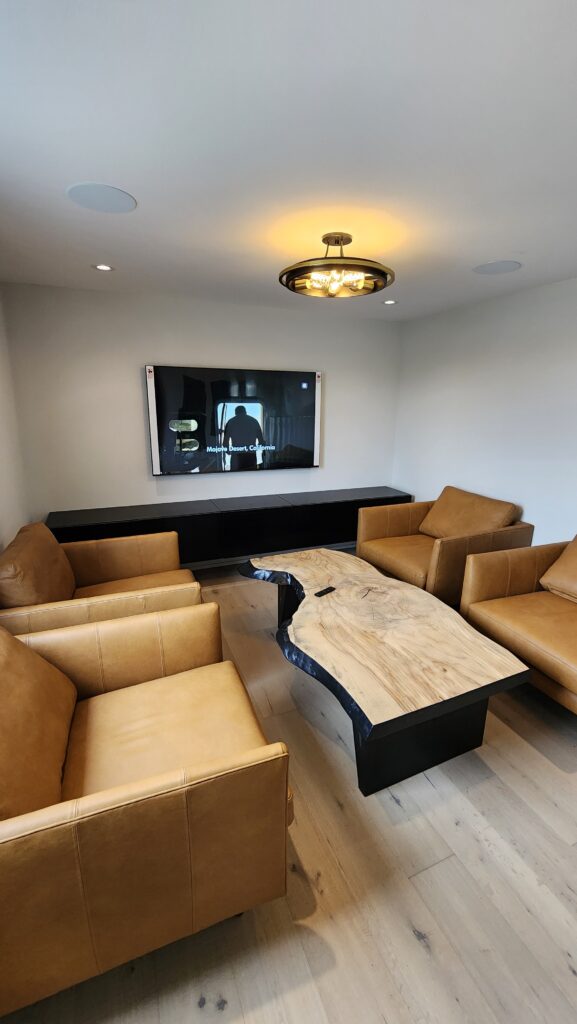
There’s a simple test for whether a home automation install was done properly: can you see any of it? Not the screens or the lighting effects — the wires, the mounts, the hardware itself.
Why Invisible Is the Goal
A system that’s genuinely well-planned and well-installed doesn’t announce itself. Wires are routed through walls, not along baseboards. Equipment lives out of sight, not stacked in a visible corner. The whole point of custom automation is that it enhances a space without visually competing with it.
What Exposed Wiring Actually Signals
When wiring is visible, it’s usually a sign the system was added after the fact, without proper planning — a retrofit rather than something built in from the start. It’s not necessarily poor workmanship, but it is a compromise that shows.
The Standard We Hold
A properly done install should feel like it was always part of the home, not something layered on top of it. No visible wires isn’t a nice bonus — it’s the actual benchmark for whether a job was done right.