
When the Client Changes the Plan Last Minute: A Real Example
Plans change. On a long enough project, they almost always do — and how a job handles that moment says more about the quality of the work than how smoothly everything went before it.
The Situation
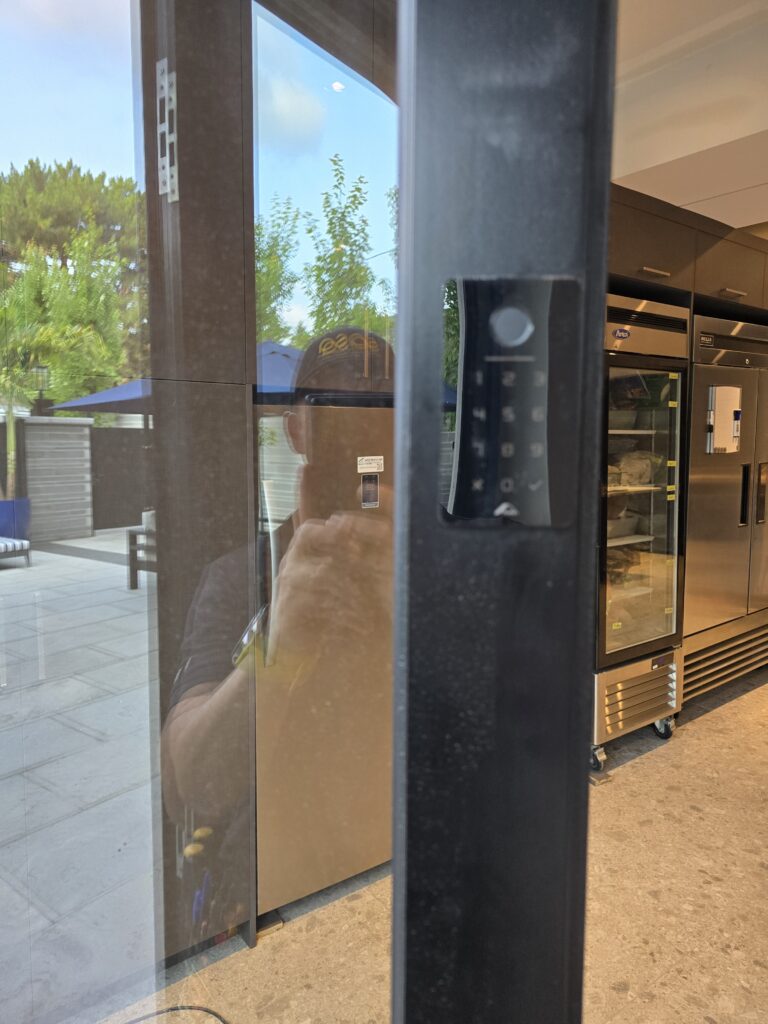
Partway through a recent project, the client decided to change the door design. Not a small tweak — a real shift that meant the original automation plan for that door no longer applied. The mechanism, the placement, the whole approach needed to be rethought.
Scrapping the Plan (And Starting Over, Fast)
There’s no way around it: this meant going back to the drawing board on that specific piece of the job. Mark walked through what the new design actually required, what could still be reused from the original plan, and what needed a completely different approach.
This is the part of custom work that doesn’t show up in a highlight reel — the real-time problem-solving that happens when a plan you’d already committed to no longer fits.
Why This Isn’t a Setback
It’s easy to think of a mid-project change as a delay or a mistake. In practice, it’s just part of doing custom work for real homes with real people making real decisions along the way. A system built around a rigid, unchangeable plan isn’t actually more “custom” — it’s just less adaptable.
The value isn’t in never having to change course. It’s in being able to change course without the final result suffering for it.
The Bigger Picture
We’ve written before about why planning automation before construction starts matters — and it still does. But planning well and staying flexible aren’t opposites. The best outcome comes from having a solid plan and the ability to adapt it when the situation calls for it.