
The Real Cost of Retrofitting Home Automation (vs. Planning Ahead)
We’ve talked before about why automation should be part of the plan before construction starts. Here’s the flip side of that conversation: what actually happens, cost- and capability-wise, when it isn’t.
What Retrofitting Actually Involves
Once walls are closed and finishes are in place, running new wiring means one of a few things: fishing cable through existing walls (limited and sometimes impossible depending on the structure), surface-mounted conduit (functional, but visible), or opening up drywall to run things properly (effective, but adds real cost and mess to a home that’s already finished).
None of these are wrong choices — sometimes retrofitting is simply the situation you’re in. But each one comes with real tradeoffs that planning ahead avoids entirely.
The Cost Difference
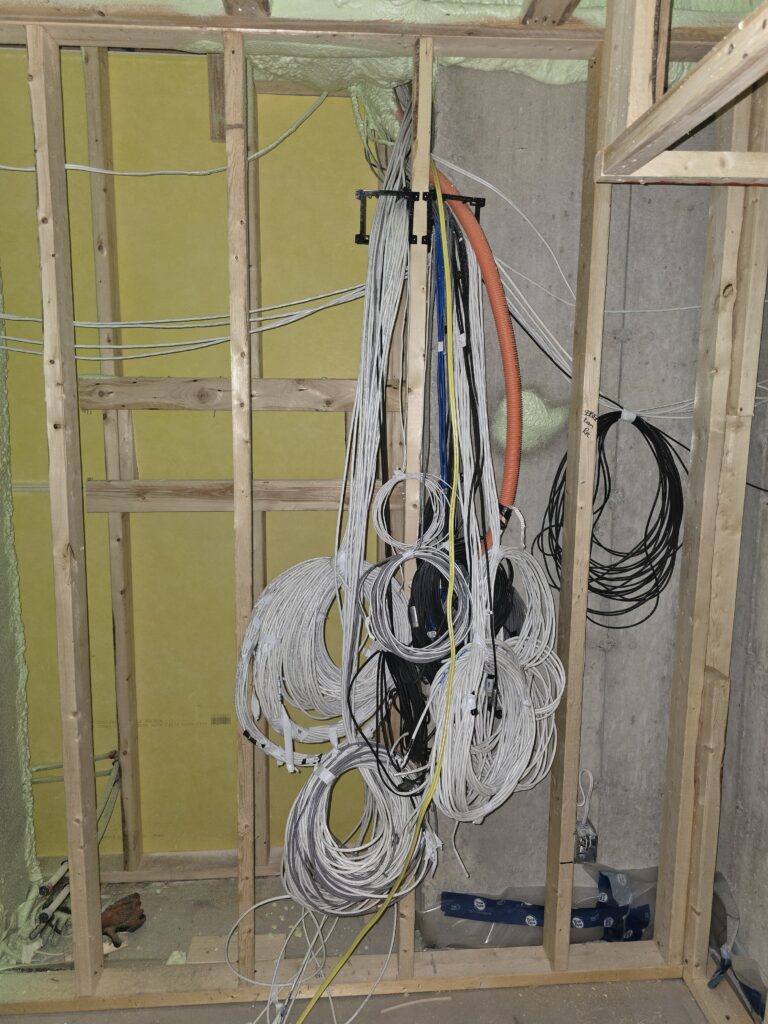
Pre-construction wiring is inexpensive relative to the rest of a build — it’s cable and labor, done alongside work that’s already happening. Retrofitting the same wiring after the fact often costs several times more, purely because of the extra labor involved in accessing spaces that are no longer open.
It’s not that retrofitting isn’t worth it. It’s that homeowners are often surprised by the cost difference when they find out too late that it was ever a choice at all.
What You Lose Beyond Cost
Cost isn’t the only factor. Some placements — a recessed ceiling speaker, a wall-integrated panel — are simply easier, cleaner, or in some cases only possible before finishes go up. Retrofitting can usually get you most of the way there. It rarely gets you all the way.
The Real Takeaway
If you’re mid-renovation or already built, retrofitting is still absolutely worth doing right — we do it often, and it can turn out great. But if you’re still in the planning phase of a build, this is exactly why we push so hard on getting automation into that conversation early. It’s the difference between adding a system and building one in.